
Wingsuit Flying: Requirements, Glide and Training
Check USPA wingsuit requirements and first-flight training context. Understand glide ratio, suit selection and why aircraft skydives differ from BASE.
By ActionSportsHQ Editorial · Published · 5 min read
At a glance
- A wingsuit changes aerodynamic forces while the flyer still descends relative to the air.
- Glide ratio is a performance relationship under conditions, not guaranteed terrain clearance.
- USPA requires at least 200 skydives and a current skydiving licence for a wingsuit jump; that minimum is not complete readiness assessment.
Wingsuit flying changes the relationship between a skydiver’s forward motion and descent by adding aerodynamic surfaces around the body. In the USPA context, a wingsuit jump requires at least 200 skydives and a current skydiving licence. Those minimums are distinct from first-flight training, suitable equipment and demonstrated readiness for an aircraft-based wingsuit skydive. 1
What glide ratio means
Glide ratio compares horizontal distance with vertical descent under stated conditions. A higher observed ratio does not mean a suit will always deliver that result. Body control, suit design, load, air movement and the way performance is measured affect the figure.
Do not treat a generic chart of beginner, advanced and competition suits as a terrain-clearance calculator. Wind affects the relationship between motion through air and progress over the ground. A suit-performance claim cannot certify a line past a mountain.
Suit selection changes the learning task
Different suits and configurations can create different handling demands. The manufacturer and suitable wingsuit instructor should determine the appropriate equipment for the person’s training stage. Bigger fabric surfaces or an impressive published performance number are not automatic beginner advantages.
Fit, the parachute system and the complete equipment arrangement also matter. Follow the actual instructions and checks rather than borrowing assumptions from a different suit or jumping system.
Verify prerequisites without confusing them with competence
USPA’s current Basic Safety Requirements state that a person making a wingsuit jump must have at least 200 skydives and hold a current skydiving licence. 1 This is the USPA requirement in its operating context, not a universal law for every jurisdiction or proof that every person meeting it is ready.
Current skills, recent experience, suitable equipment, the drop zone’s requirements and a qualified first-flight course remain separate questions. The student-training framework helps distinguish accumulated jump numbers from demonstrated ability. 2
Minimum requirements, training and suit choice are three checks
USPA’s specialist wingsuit recommendations address a first-flight course, relevant coach experience, equipment and later progression. 3 The minimum jump count belongs to that wider context; it is not a substitute for each of the other checks.
| Question | What to verify | What it cannot establish alone |
|---|---|---|
| Minimum prerequisites | Applicable rules, current licence and recorded experience | Complete competence in the intended task |
| First-flight instruction | Appropriate coach and drop-zone requirements | Suitability of every later flight or larger suit |
| Suit and parachute arrangement | Manufacturer guidance and exact configuration | A universal emergency sequence |
| Flight plan | The actual airspace, other jump groups and conditions | Terrain clearance from a published glide figure |
For a purely arithmetic glide example, a ratio of 3 to 1 means three units of horizontal travel for one unit of vertical descent under the stated measurement convention. It is not a claim that a particular suit achieves that ratio. It also does not account for a changed wind, body control or the distinction between air-relative performance and ground travel.
A hypothetical 3-to-1 value must therefore never be laid over a mountain photograph to approve a line. The measurement is a relationship under conditions, not a reserve of guaranteed clearance.
The skydiving basics article separates freefall from canopy flight, while the tandem introduction describes a different starting experience. Keep the learning pathways distinct instead of treating them as a fixed sequence of purchases.
Deployment and abnormal situations are equipment-specific
A wingsuit changes the practical context of movement and deployment. The relevant procedures must be taught and rehearsed with suitable instruction. A generic statement such as “arch, then reach for a cutaway” is not a complete or reliable response to every abnormal situation.
This article gives no universal pull altitude, emergency sequence or separation method. Those decisions belong to the actual training, equipment and jump plan rather than a short online procedure.
Do not merge aircraft jumps with BASE
BASE and aircraft-based skydiving have different equipment, operating and terrain contexts. Experience in one should not be treated as automatic readiness for the other. A calendar that ends in proximity flying after a few seasons is not a qualification pathway.
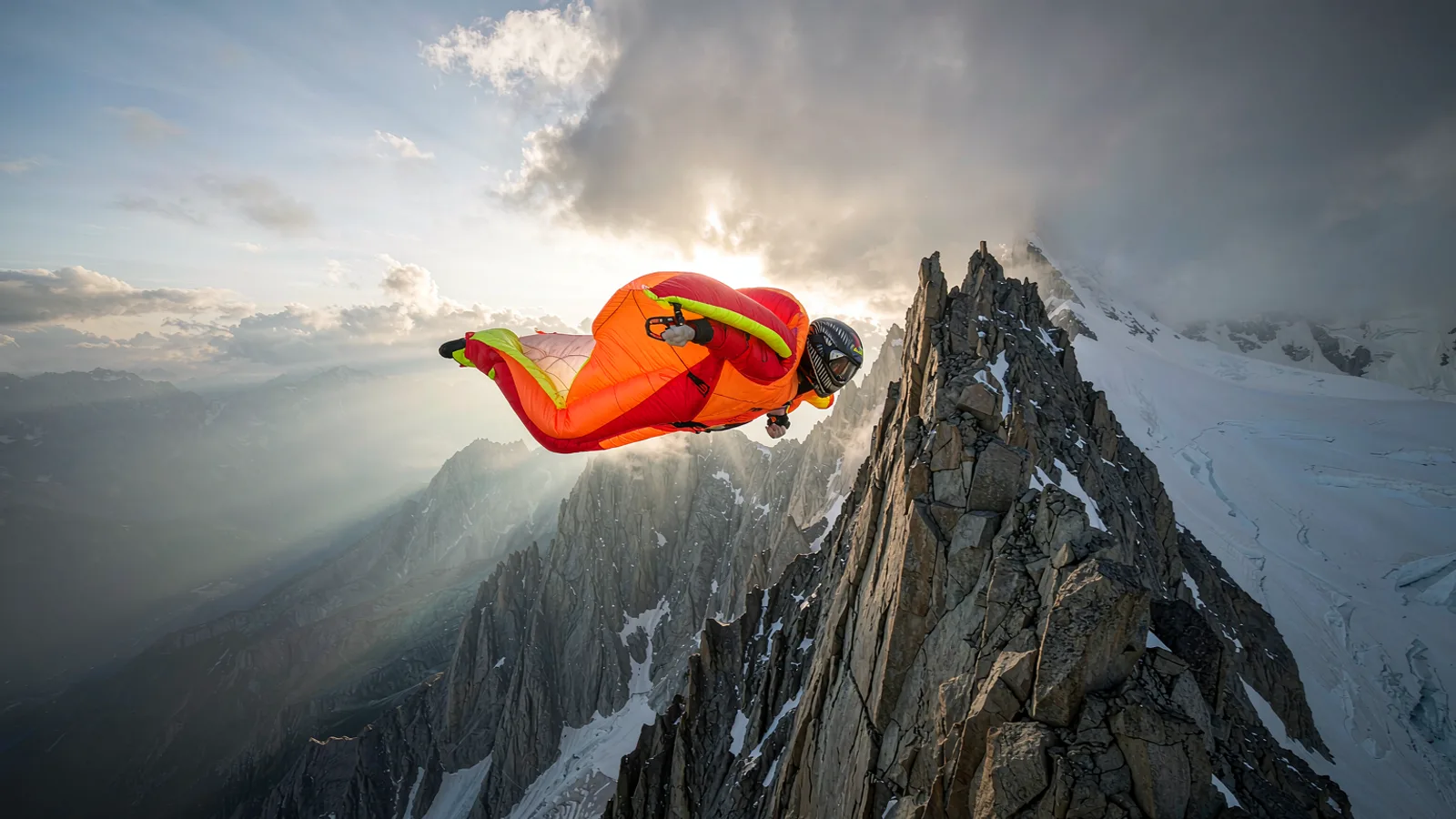
The cover depicts wingsuit flight near mountain scenery for illustration. It is not an approved route, an equipment demonstration or a recommendation to approach terrain. A useful understanding of wingsuit dynamics includes recognising what a glide figure, a suit label and a minimum jump count cannot establish.
Reader questions
How many skydives are required before a USPA-context wingsuit jump?
USPA's Basic Safety Requirements specify at least 200 skydives and a current skydiving licence. USPA also recommends specialist first-flight instruction. These are contextual requirements and recommendations, not a universal law or proof that every person meeting the minimum is ready.
Can a wingsuit glide-ratio claim tell me that a terrain line is possible?
No. A ratio depends on conditions and how it is measured. Wind, body control, equipment and air-relative versus ground-relative motion all matter. A performance claim cannot certify terrain clearance, and aircraft wingsuit training is distinct from BASE or proximity flight.
Sources and scope
Each reference supports the topic stated in its scope note. Worked examples are illustrative unless identified as measured results. Use current local information and the manual for your own equipment alongside appropriate practical instruction.
- USPA: Basic Safety RequirementsUSPA minimum wingsuit prerequisites: recorded jump experience and a current skydiving licence.
- USPA: Integrated Student Program introductionThe scope of structured student instruction and the distinction between training methods.
- USPA SIM: discipline-specific recommendationsSpecialist skydiving recommendations including wingsuit training, equipment and group-flight preparation.
Continue reading
- Skydiving Basics: Freefall, Parachutes and Training
Understand skydiving freefall, drag, parachute deployment and canopy flight. Compare tandem, AFF and other student methods before choosing training.
- First Tandem Skydive: What to Expect and Ask Beforehand
Prepare for your first tandem skydive with questions about eligibility, clothing, timing, weather delays, instructor briefings and what happens afterwards.