
Ski Skin Sizing: Width, Length, Trimming and Compatibility
Size climbing skins for your exact ski: compare width, length, edge exposure and tip-tail attachments, then confirm compatibility before trimming or ordering.
By ActionSportsHQ Editorial · Published · 7 min read
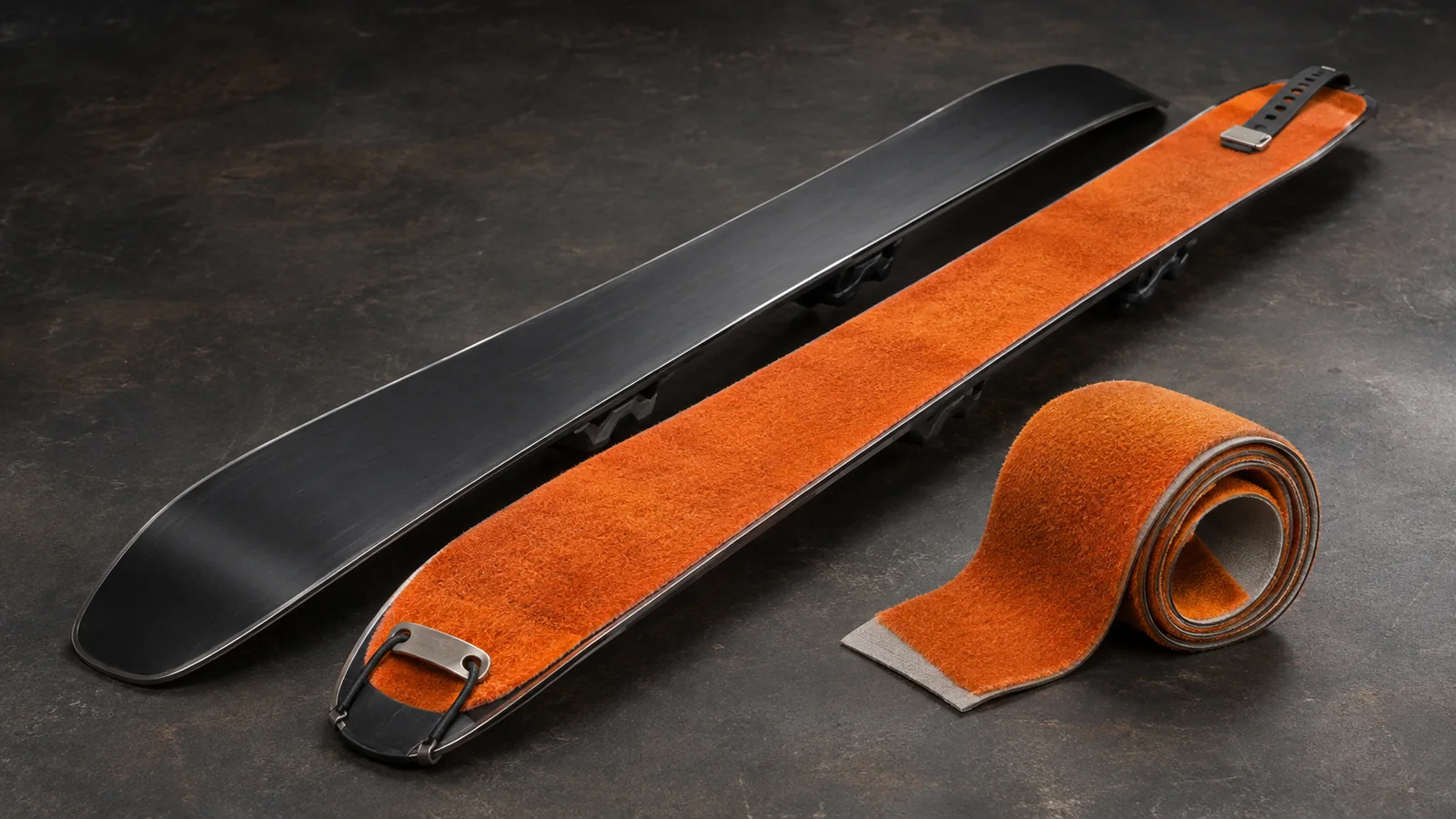
At a glance
- Identify the exact ski model, model year and length before selecting a skin width and attachment arrangement.
- Width describes lateral coverage while the assembled length includes the relationship between material and end attachments.
- Match the manufacturer's finished-coverage guidance and trim tool; a generic diagram cannot supply an edge clearance or cutting sequence.
Ski skin sizing must match the ski’s outline and supported length range as well as its tip and tail attachments. Width answers a coverage question; length and attachment design answer different fit questions. Matching the waist width alone does not establish a complete fit.
Start with the exact ski model, generation and length. Then check the skin’s sizing convention, coverage and supplied end fittings before ordering or cutting. The comparisons below explain how to collect that information; finished edge exposure and trimming follow the instructions for the actual system.
Identify the ski before comparing skin sizes
POMOCA’s selection tool starts with ski brand, model and size. That is a more useful starting point than a waist measurement alone. 1 Put the ski’s model year beside those fields when you have it; the same familiar name can appear on equipment with different dimensions or end shapes.
Build a short fit record from the actual equipment:
| Item | Record precisely | Why a shorthand can fail |
|---|---|---|
| Ski identity | Brand, model, model year and stated length | A shared model name does not identify every version |
| Base outline | Published tip, waist and tail dimensions for that exact length | The waist omits the wider portions of the ski |
| Tip and tail | Shape and any system-specific attachment interfaces | “Universal” in another product’s name is not a fit check |
| Skin identity | Model, width, length option and attachment version | A material width alone omits the assembled system |
| Mounted equipment | Binding and brake arrangement on the actual ski | A base-only photograph leaves the complete setup out |
Do not assume that a binding changes the skin’s width requirement. The point of recording it is to keep the actual ski setup available when a supplier checks clearance, handling and compatibility. Binding fit and skin fit remain separate confirmations.
Width and length solve different problems
Width concerns coverage across the base. Length concerns the material and the tip-to-tail arrangement after the specified attachments are included. Neither dimension can compensate for the other: extra fabric beside the ski does not fix an end fitting that fails to engage.
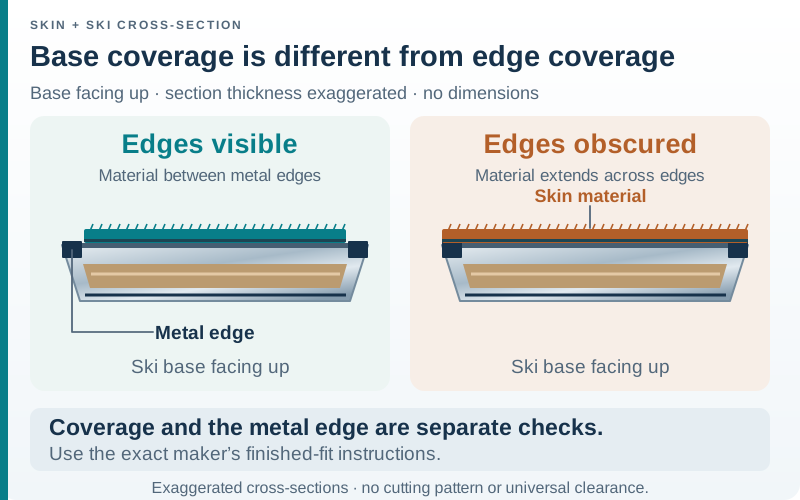
POMOCA’s guide calls for the skin and attachment system to be adapted to the ski length before its illustrated side trimming. Its finished-fit description distinguishes a covered base from the two visible metal edges. 2 Treat that as a relationship to check against your product’s own instructions, not a universal cutting recipe.
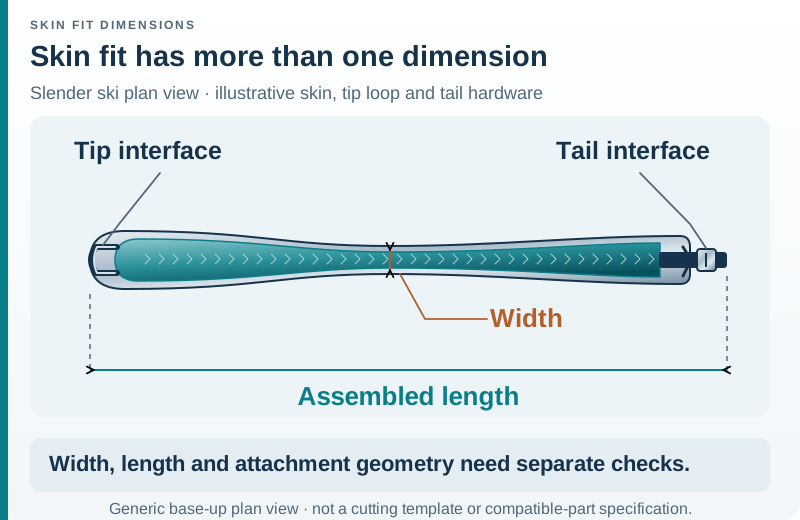
For example, imagine two fictional skis with a 99 mm waist. Ski A has a 130 mm tip and a stated length of 176 cm. Ski B has a 121 mm tip and a stated length of 184 cm. Their shared waist does not make their outlines or end-to-end fit identical. These invented dimensions illustrate missing information, not recommended skin sizes.
If a candidate’s length range includes one ski but not the other, matching waist width cannot resolve that mismatch. If both lengths are supported, you still need the shape and attachment checks. A single “fits 99 mm skis” label would compress several questions into one unsupported answer.
Understand edge exposure without inventing a clearance
“Full coverage” can be ambiguous. It might mean useful coverage of the base in the manufacturer’s intended area, or someone might mistakenly mean fabric over the metal edges too. Ask which is being described.
The following cross-section uses exaggerated rails so the distinction is visible. It does not prescribe how many millimetres to expose, how much base may remain visible or where to position a trimmer. Those details belong to the exact ski, skin, tool and instructions.
A second geometry exercise helps separate starting width from finished fit. A centred 120 mm rectangular strip is 10 mm narrower overall than a 130 mm-wide outline at one location, but 21 mm wider than a 99 mm outline at another. Dividing those differences by two gives the symmetric differences at each side. This arithmetic describes rectangles and widths only; it cannot identify the manufacturer’s required coverage or turn an unsuitable blank into a suitable one.
Once material has been removed, a wider location elsewhere on the ski cannot borrow that material back. That is why confirming the outline before trimming is more useful than judging the result from the waist alone.
Read the exact attachment and trimming instructions
Black Diamond’s FAQ directs users to the product manual or its skin instruction video and distinguishes an example with pre-sized length from other arrangements. 3 Do not transfer a remembered trimming sequence between systems because both packages include a blade.
Useful questions for the supplier are concrete:
- Does this exact skin version support this ski model and length?
- Which tip and tail parts are required, including any separate adapters?
- Is the listed length a ski-length range, a material measurement or another product-specific size?
- Does this package arrive at a fixed length, require length adjustment or use a dedicated precut outline?
- Which manual and trimming tool apply to the supplied version?
Keep an unresolved answer unresolved. A photograph of a hook near a ski tip shows proximity; it does not show that the complete system is fitted as specified. A sales listing’s generic length range also cannot explain an unfamiliar tail interface.
If your ski is absent from a selection tool, ask with the exact identifiers and clear photos. A “no result” message establishes a missing match in that tool, rather than proving either incompatibility or compatibility.
Compare the evidence before modifying anything
Imagine a fictional purchase review with three candidates. Candidate A has a documented model-and-length match, but its attachment version is not identified. Candidate B lists the right attachment, but its length range excludes the ski. Candidate C has confirmed identity, length range, attachment parts and instructions.
Candidate A needs an attachment answer. Candidate B needs a different supported size or system; a width comparison does not solve its length problem. Candidate C has the information needed for the next product-specific fit check. This comparison ranks the completeness of the evidence, not grip, glide or product quality.
Save the confirmed combination and the manual version with the equipment record. The ski sidecut and profile guide explains what tip, waist and tail dimensions describe before they are used in a coverage comparison. For a ski-touring setup, a correct skin match resolves one equipment question. It leaves the outing’s weather, snowpack and skills questions intact. A splitboard has its own outline and attachment arrangement, so a ski-sized answer should not be carried across by name alone.
Sources checked 3 November 2026. All equipment examples and diagrams are original explanatory material. No skin, ski or attachment has been field-tested for this guide.
Reader questions
Can one pair of skins fit two skis with the same waist width?
Waist width alone cannot answer that. Compare the entire ski shape, exact length, tip and tail interfaces, and the skin's adjustment range against the manufacturer's guidance. A skin already trimmed for one shape may not provide the required coverage on another.
Does a wider skin mean the metal edges should be covered?
No. Starting material width and finished coverage are different questions. POMOCA's illustrated finished fit leaves the metal edges visible. Follow the exact system's instructions rather than using this diagram to choose a universal clearance.
Should I cut a skin before confirming the end attachments fit?
Establish the exact ski and attachment compatibility first, following the relevant manual or asking the supplier to confirm the fit. Cutting changes the available material and cannot correct an incompatible hook, loop or length arrangement.
Sources and scope
Each reference supports the topic stated in its scope note. Worked examples are illustrative unless identified as measured results. Use current local information and the manual for your own equipment alongside appropriate practical instruction.
- POMOCA: Find Your SkinManufacturer selection beginning with ski brand, model and size.
- POMOCA: self-adhesive skins user guideAssembled length, attachment alignment and the distinction between base coverage and visible ski edges.
- Black Diamond: product FAQs, ski skinsProduct-specific trimming instructions and different fixed-length or trim-to-fit arrangements.
Continue reading
- Ski Touring vs Skimo: Skins, Gear and Transitions
Compare ski touring, ski mountaineering and skimo racing. Understand climbing skins, boot and binding modes, and how to organise a transition.
- Backcountry Snowboarding: Terrain, Forecasts and Gear
Plan backcountry snowboarding around avalanche forecasts, connected terrain and group skills. Distinguish splitboard access from powder-board design.
- Mountain Layering System: Base, Midlayer and Shell
Plan clothing for ascent, stops and the return. Use a downloadable layering field log and a fictional worked record to separate garment, fit and packing problems.
- Ski Sidecut Radius, Rocker and Effective Edge Explained
Understand ski sidecut radius, camber, rocker and effective edge. Compare specification views and learn why a stated radius does not fix the size of each turn.