
Freeride Skiing: Powder Skis and Variable Snow
Understand freeride skiing through ski width, rocker and changing snow. Compare equipment trade-offs and check what off-piste management actually covers.
By ActionSportsHQ Editorial · Published · 5 min read
At a glance
- Ungroomed snow changes support and resistance; a wider ski does not eliminate the need for appropriate technique.
- Off-piste does not necessarily mean avalanche-controlled; confirm the actual area status.
- Snow conditions and terrain exposure belong in the route decision before the first turn.
Freeride skiing usually means skiing ungroomed terrain, including powder and variable snow. Ski width, rocker and stiffness influence how the equipment behaves, while snow depth and structure change the support under it. The word ‘freeride’ does not establish avalanche control, access permission or a skier’s readiness for a line.
Snow changes how the ski is supported
On a firm surface, ski edges and contact with the snow are prominent parts of the turning interaction. In deeper snow, the ski moves through and deforms a volume of snow. Snow density, depth and the ski’s shape affect how it is supported and how resistance develops.
It is too simple to say every powder turn is identical to a board planing on water. Skis can encounter a crust, tracked patches or firmer snow under a softer layer. A posture that works for one moment may not handle the next change appropriately.
Width is one equipment characteristic
A wider ski can distribute load over more area, but width alone does not describe the entire response. Length, shape, stiffness and the actual snow conditions matter too. Equipment selection should fit the rider and use rather than rely on the widest available model.
Bindings and boots have separate compatibility, adjustment and maintenance requirements. Use the actual manufacturer instructions and an appropriate qualified service rather than copying a generic setting. Equipment preparation cannot determine whether the chosen terrain is appropriate.
Read width, rocker and flex as a combination
Salomon’s freeride guide discusses waist width alongside tip/tail rocker and the balance between powder use and firmer snow. 4 This is a useful way to read a specification: each feature belongs to a complete design, rather than a competition to find the largest number.
| Design term | What it describes | A question to ask when comparing skis |
|---|---|---|
| Waist width | Width near the binding area | How much of the intended skiing is deep versus firm or mixed snow? |
| Rocker | Upward profile toward the tip or tail | How does the maker describe the intended snow and handling? |
| Camber | The unloaded ski profile through its middle | How does that profile combine with the rest of this model? |
| Flex | How the ski bends under loading | Does the intended use and skier match the complete design? |
Consider a day that begins on groomed access runs, includes an open ungroomed area and ends on tracked, firmer snow. ‘Best for powder’ describes only part of that day. A useful equipment conversation includes the return surfaces as well as the most attractive photograph. This is an illustrative selection problem, not a review or endorsement of a particular ski.
Keep equipment selection separate from learning movement. A ski that offers useful support in soft snow will still encounter crust, tracks or compact patches. Ask an instructor to identify one manageable snow condition and learning task in open terrain suited to the lesson. The mountain layering guide covers changing work rates; the avalanche forecast guide addresses the planning context beyond appropriately managed terrain.
Learn variable-snow movement in a suitable area
A qualified instructor can choose an exercise matched to the skier’s current skills and the resort’s open terrain. The useful objective is controlled movement through a particular snow condition, not following a fixed schedule from groomers to steep powder.
Notice where a line changes surface and where the skier can stop without obstructing others. The NSAA Responsibility Code concerns control and shared-slope responsibility. It should not be read as an avalanche assessment for uncontrolled terrain. 1
Outside managed terrain, the planning question changes
Read the current avalanche forecast, including the problems and their distribution. 2 Assess the route and exposure with suitable training and local information. A gentle approach can still pass beneath release terrain, and a previous track does not certify stability.
A local snowpit is not a shortcut to declaring the whole line safe. Snowpack tests have limitations arising from spatial variability and scale; they cannot alone establish stability. 3 Rescue equipment and practice are important but do not compensate for an unsuitable route.
Choose a learning objective you can reassess
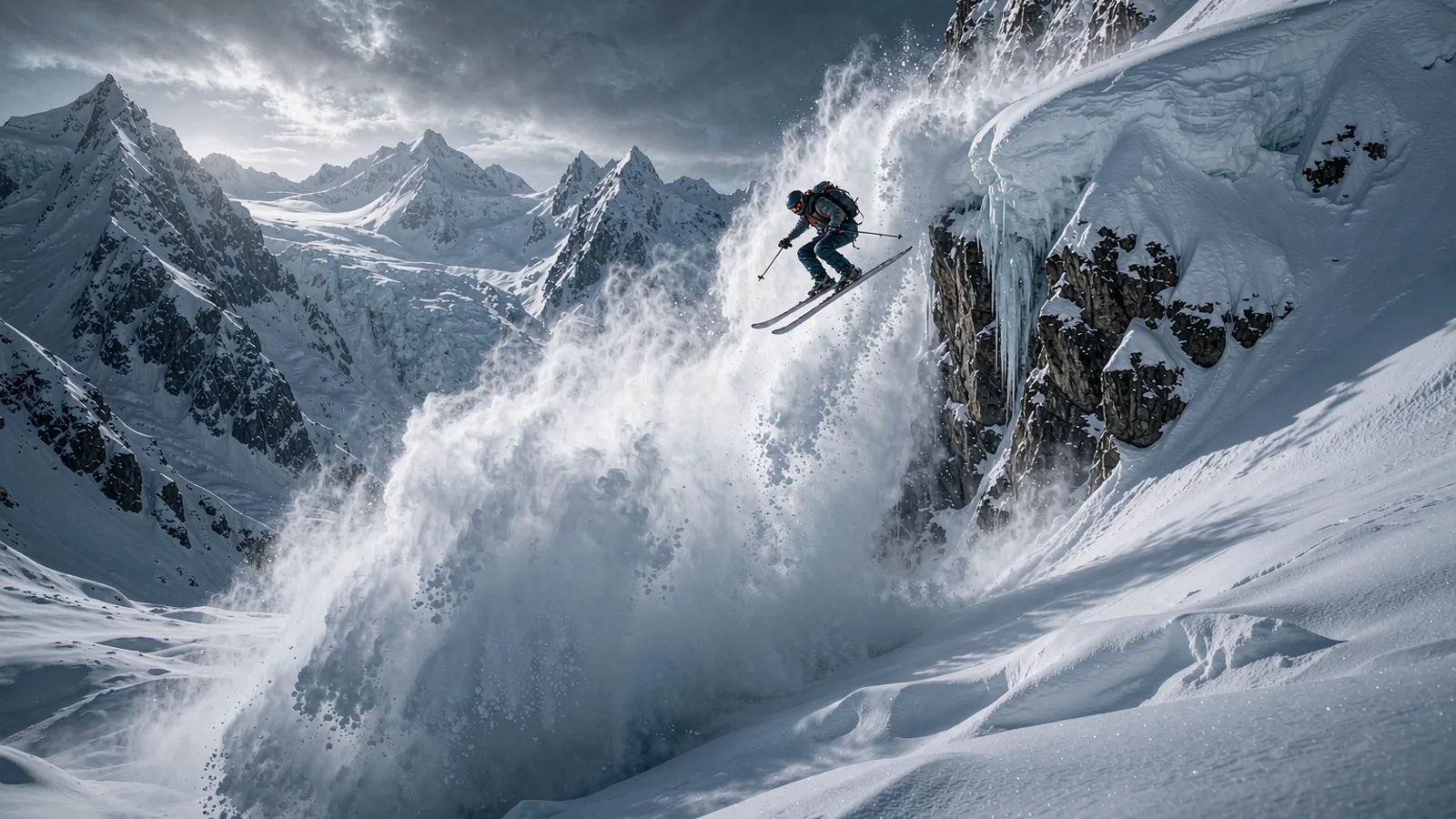
Keep the task specific, the route appropriate and an alternative available. If visibility, snow or the group’s ability changes, revise the objective. Progress in freeride skiing includes managing a change in surface and recognising when a desired line does not fit the current situation. Neither ski width nor a dramatic cover image makes that decision for the skier.
A published sidecut radius is one part of a ski description. Use the sidecut, rocker and effective-edge comparison to distinguish that geometric figure from the size of a turn on snow and from the length of edge engaging under load.
Reader questions
What is the difference between freeride and backcountry skiing?
Freeride describes a style and terrain preference, while backcountry describes an operating context outside ordinary managed-piste arrangements. Ungroomed skiing may occur in different management settings. Check the actual boundary, access rules and avalanche-control information.
Are wider skis always better for freeride?
No. Width interacts with length, rocker, flex, the skier and the snow. A design intended for deep powder may not suit a day dominated by firmer or mixed conditions. Compare the whole outing and the maker's intended use rather than width alone.
Sources and scope
Each reference supports the topic stated in its scope note. Worked examples are illustrative unless identified as measured results. Use current local information and the manual for your own equipment alongside appropriate practical instruction.
- NSAA: Your Responsibility CodeShared-slope responsibility; it does not establish off-piste avalanche safety.
- Avalanche.org: avalanche forecastsForecast coverage, validity periods and the information in a bulletin.
- Avalanche.org: snowpack testsThe limitations of local tests and why a test cannot alone prove stability.
- Salomon: choosing freeride skisManufacturer discussion of ski width, rocker and the intended balance of powder and mixed-snow use.
Continue reading
- Ski Sidecut Radius, Rocker and Effective Edge Explained
Understand ski sidecut radius, camber, rocker and effective edge. Compare specification views and learn why a stated radius does not fix the size of each turn.
- How to Read an Avalanche Forecast and Danger Rating
Read avalanche forecast regions, validity, danger levels, elevation bands and aspects. Use a worked bulletin example to connect problems with route questions.
- Backcountry Snowboarding: Terrain, Forecasts and Gear
Plan backcountry snowboarding around avalanche forecasts, connected terrain and group skills. Distinguish splitboard access from powder-board design.
- Mountain Layering System: Base, Midlayer and Shell
Plan clothing for ascent, stops and the return. Use a downloadable layering field log and a fictional worked record to separate garment, fit and packing problems.