
BMX Bowl Riding: How Pumping and Transitions Work
Understand BMX bowl pumping, transition shape and line choice. Compare banks, curved walls and coping before choosing a suitable coached session.
By ActionSportsHQ Editorial · Published · 5 min read
At a glance
- Bowl shapes vary; transitions, flat areas and exits must be understood as a whole route.
- Pumping involves the rider doing work on the bike-and-rider system, not creating energy from nowhere.
- A clear line and reliable stopping matter before learning drop-ins or airs with a coach.
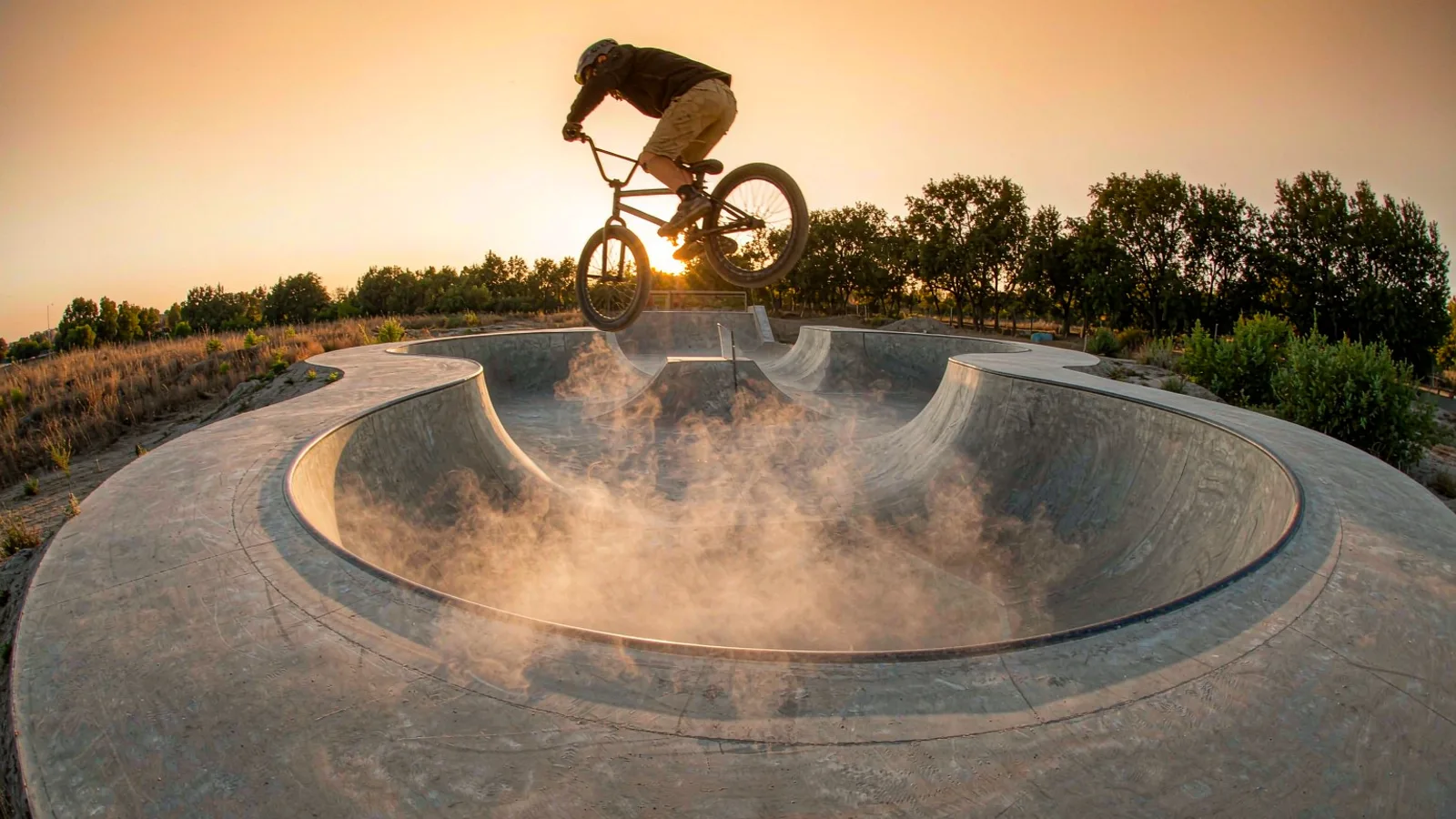
BMX bowl riding links curved transitions into a continuous line. Pumping means the rider adds work through coordinated movement as the bike follows the terrain; it is different from simply coasting downhill. Before choosing a line, distinguish the entry, wall shape, connecting features and exit, because bowl depth alone does not describe the riding task.
Curvature changes the demands on the rider
Turning a moving bike requires a force that changes its direction. On a transition, the orientation of the riding surface also changes. Speed, curvature and the rider’s movement interact, so a shallow bank and a steep curved wall are not interchangeable practice features.
There is no universal lean-angle table for every bowl. Surface grip, line, speed and transition shape differ. Nor does a particular bowl depth imply that a rider can travel upside down safely. Those shortcuts hide the conditions that make a movement possible.
Pumping means adding work at the right time
Without additional work, a moving system loses energy through resistance and impacts. A rider can add energy by moving against the forces experienced as the bike follows the shape of the terrain. That is the basis of pumping: timing matters because the surface and forces change through the line.
This explanation is a model, not a body-position prescription. A qualified coach can demonstrate appropriate movements on a suitable small feature and distinguish effective timing from simply bouncing on the bike. The goal is a controlled response to the terrain, not maximum speed on the first run.
Banks, transitions and coping describe different features
| Feature | What the term describes | What to inspect before a session |
|---|---|---|
| Bank | An inclined riding surface | The joins at the bottom and top, plus the runout |
| Transition | A curved change in surface direction | How quickly the curve changes and where it leads |
| Coping | The edge detail at the lip | Its shape, condition and relationship to the deck |
| Hip or connecting corner | A change between adjoining lines or surfaces | Who can approach from the other side |
Consider two bowls of equal depth: one has a broad, gradual transition, while another reaches a steep wall over a shorter distance. Their depth measurements match, but their direction changes and available lines do not. This is an illustrative geometry comparison, not a calculation of a suitable entry speed.
British Cycling includes non-pedalling pumping exercises in its BMX coaching material. 3 That supports treating pumping as a learnable terrain skill; a track exercise does not provide a drop-in method for an unfamiliar bowl. Ask the coach to identify the feature and learning goal first. If the task is understanding pumping, adding an air or a deeper entry changes the question.
Prepare the bike with the BMX pre-ride inspection, then use the skatepark etiquette guide to map the shared line. Keeping these checks separate makes it easier to identify whether a problem concerns equipment, timing or traffic.
Learn the route before the entry
Observe where the line begins, how it crosses other paths and where it ends. Check blind areas and recovery space. A rider who can negotiate one wall but cannot manage the exit does not yet have control of the whole run.
Drop-ins and airs introduce additional demands and should be taught in an appropriate setting. They are not mandatory steps on a calendar. A useful early session can involve ordinary handling, observation and coached practice on features that match existing skills.
The bike and helmet need their own checks
Inspect the actual BMX bike using its component instructions. Cycling UK’s maintenance resources explain systematic inspection, but they do not establish BMX-specific torque settings or certify a bike for every impact. 1 After a crash or a new mechanical symptom, repeat the relevant checks before returning to a run.
Use a helmet suitable for the activity and jurisdiction, with correct fit and condition. The US CPSC bicycle standard applies to bicycle helmets; a different sport label is not automatically equivalent. 2 Protective gear reduces some risks without making an unfamiliar deep bowl appropriate.
Judge the session by repeatable control
Keep the task specific: a line understood, an entry selected with instruction and an exit that remains predictable. If traffic, tiredness or surface conditions change, reassess the task. A fast lap that happens once is less useful learning evidence than a simpler line that remains controlled without relying on luck.
Reader questions
Can a BMX gain speed in a bowl without pedalling?
Yes. Pumping can add energy through the rider's movement against the forces acting along the terrain. Coasting alone exchanges height and speed while losing energy to resistance. Effective pumping needs suitable timing and practical coaching.
Does a deeper bowl always have a steeper transition?
No. Depth and transition shape are different measurements. Two equally deep bowls can have different curves, flat bottoms, extensions and exits. Inspect the actual line instead of choosing a feature from its depth label.
Sources and scope
Each reference supports the topic stated in its scope note. Worked examples are illustrative unless identified as measured results. Use current local information and the manual for your own equipment alongside appropriate practical instruction.
- Cycling UK: bicycle maintenance guidesGeneral bicycle inspection and maintenance background; use component-specific installation and torque instructions.
- CPSC: bicycle helmet requirementsThe US bicycle-helmet standard and the distinction from other sport helmets.
- British Cycling: essential BMX techniquesBMX coaching context and pumping without pedalling; track exercises are not a bowl drop-in lesson.
Continue reading
- BMX Pre-Ride Check: Wheels, Brakes and Bike Inspection
Organise a BMX pre-ride check and write a useful fault report. Download a reusable inspection log with clearly labelled fictional examples for a mechanic.
- Skatepark Etiquette: Taking Turns and Planning Lines
Learn skatepark etiquette for queues, shared lines, blind bowls and filming. Use a practical session example to choose where to wait, ride and finish.
- BMX Grinds Explained: Pegs, Contact and Compatibility
Understand BMX grind contacts, peg cores and sleeves, axle compatibility, and the approach and exit questions that define a complete street line.