
Paramotoring Explained: Thrust, Lift and Wing Matching
Understand how a paramotor adds thrust to a paraglider. Check all-up weight, powered-use approval, component matching and the operating context.
By ActionSportsHQ Editorial · Published · 4 min read
At a glance
- The motor produces thrust; the wing’s interaction with air supplies lift.
- A wing suitable for free flight is not automatically approved for every powered configuration.
- Field access, airspace, equipment checks and practical training are separate requirements of the activity.
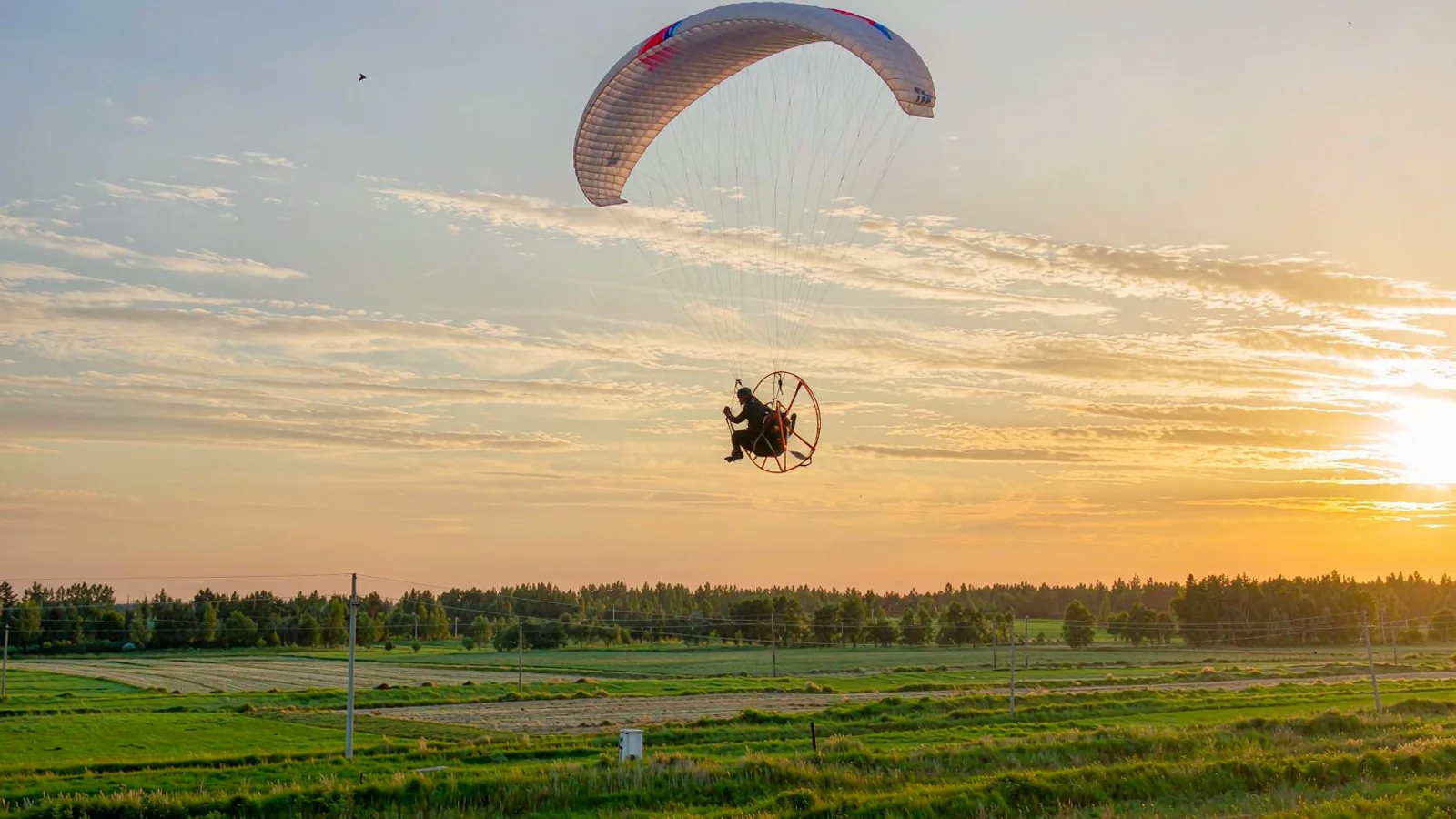
Paramotoring adds a propulsion unit to a paraglider system. The propeller supplies thrust, while the wing produces aerodynamic forces as it moves through air. Choosing a powered setup requires the actual wing, motor, harness and loading information; physical attachment alone does not establish an approved combination.
Distinguish thrust from lift
The propeller produces thrust, while the wing generates aerodynamic forces through its interaction with air. Power can help maintain or change the flight path, but “the engine lifts the pilot” is an incomplete description of the system.
The complete arrangement includes the pilot, wing, harness and propulsion unit. Their interactions and permitted configurations depend on the equipment. Do not infer compatibility from the fact that two products can be physically connected.
Powered configurations need their own instructions
A wing approved for one use may have different instructions or limits for another. Use the actual manufacturer’s guidance for the wing and the complete powered arrangement. Controls and settings should not be transferred uncritically from free-flight advice.
A motor also introduces fuel, moving parts and ground-handling hazards. Its checks and operating procedures are equipment-specific practical tasks. This article deliberately does not give a generic starting sequence or recommend testing a propeller near bystanders.
All-up weight is different from body weight
A wing’s documented operating range concerns the load definition supplied by its manufacturer, not a bathroom-scale reading alone. The Ozone Roadster 3 manual, for example, distinguishes its free-flight and powered weight-range context. 4 That is a product example, not a recommendation to choose that model or transfer its limits to another wing.
| Information to record | Why it is a separate question |
|---|---|
| Exact wing model, size and generation | Similar names can refer to different documentation |
| Intended free-flight or powered use | A range or approval for one use may differ from another |
| Complete supported load | Pilot and carried equipment contribute to the stated loading definition |
| Harness and propulsion arrangement | Connection, geometry and instructions concern the assembled system |
| Current condition and modifications | An original specification does not verify an altered or damaged item |
For an illustrative comparison, two pilots of the same body mass can have different complete supported loads if their motors, harnesses and carried equipment differ. Conversely, two assemblies with similar total mass can still use different wings or connection arrangements. Neither comparison selects a size or validates a configuration.
A useful supplier question is ‘Which current manual and complete arrangement does this compatibility statement cover?’ That is more informative than asking whether the wing can be connected. Ground checks, starting and emergency procedures must be taught for the actual system.
The weather-briefing guide explains how to retain height, time and site context in forecast notes. The thermal explanation separates moving air from glider performance. Powered flight introduces additional responsibilities alongside those concepts.
Training includes the ground phase
Competence is not only the ability to remain airborne. Preparation, communication, launch-area management, landing and abnormal situations belong in structured instruction. The BHPA’s powered hang-glider and paramotor code of conduct addresses responsibilities around the activity. 1
Use appropriate discipline-specific training rather than assuming prior free-flight experience answers every powered-flight question. The Pilot Syllabus identifies the broader connection between weather, air law and airmanship. 2
A flat field is not automatically an operating site
Permission to access land does not establish compliance with airspace or aviation requirements. Check the applicable local rules, restrictions and site arrangements. Respect other users and nearby communities rather than treating the availability of propulsion as permission to fly anywhere.
Weather still matters, including the conditions relevant to the planned route and landing. A motor does not make unsuitable turbulence, visibility or wind harmless. A briefing needs the full activity context, not simply enough room for a takeoff run.
Plan with the actual system
Keep equipment identification, maintenance and relevant manuals available. Resolve unknown modifications or unfamiliar control behaviour with suitable qualified support before use. The BHPA Technical Manual offers a formal training context and is not a self-training recipe. 3
A productive progression demonstrates understanding of the ground and airborne tasks, current rules and changing conditions. It does not promise independent flight after a fixed period. The companion weather guide helps organise questions without replacing powered-flight instruction or a complete aviation briefing.
Reader questions
Does a paramotor engine provide lift or thrust?
The propeller supplies thrust. The wing produces aerodynamic forces through airflow, with the complete system determining the flight path. Saying only that the engine lifts the pilot hides the separate roles of propulsion and the wing.
Can any free-flight paraglider be used with a paramotor?
Do not assume so. Confirm the wing manufacturer's powered-use instructions, loading definition, limits and the complete harness/propulsion arrangement. Approval for a different configuration or matching attachment points does not establish compatibility.
Sources and scope
Each reference supports the topic stated in its scope note. Worked examples are illustrative unless identified as measured results. Use current local information and the manual for your own equipment alongside appropriate practical instruction.
- BHPA: powered hang-glider and paramotor code of conductPowered-flight responsibilities, training, access and consideration for others.
- BHPA: Pilot SyllabusWeather, flight theory, airmanship and air-law subjects in pilot education.
- BHPA: Technical Manual, amendment 24Training framework and aviation safety context; not a do-it-yourself manual.
- Ozone: Roadster 3 pilot manualOne manufacturer example separating free-flight and powered all-up weight ranges; use the exact current manual for your equipment.
Continue reading
- Paragliding Weather: Wind, Gusts and Site Briefings
Prepare a paragliding weather briefing using forecast height, wind, gusts and trends. Connect launch, landing and local guidance without a universal wind limit.
- Paragliding Thermals: Rising Air, Sink Rate and Climb
Understand how thermals let paragliders climb while descending through the airmass. Compare air-relative sink, ground-relative climb and weather context.