
Skatepark Etiquette: Taking Turns and Planning Lines
Learn skatepark etiquette for queues, shared lines, blind bowls and filming. Use a practical session example to choose where to wait, ride and finish.
By ActionSportsHQ Editorial · Published · 6 min read
At a glance
- Read the posted rules first: bikes, scooters and skating may have different access arrangements.
- Observe complete runs before entering; a clear patch of concrete may still be part of another rider’s line.
- Choose a practice area that matches your stopping and turning skills, and keep resting and filming out of riding space.
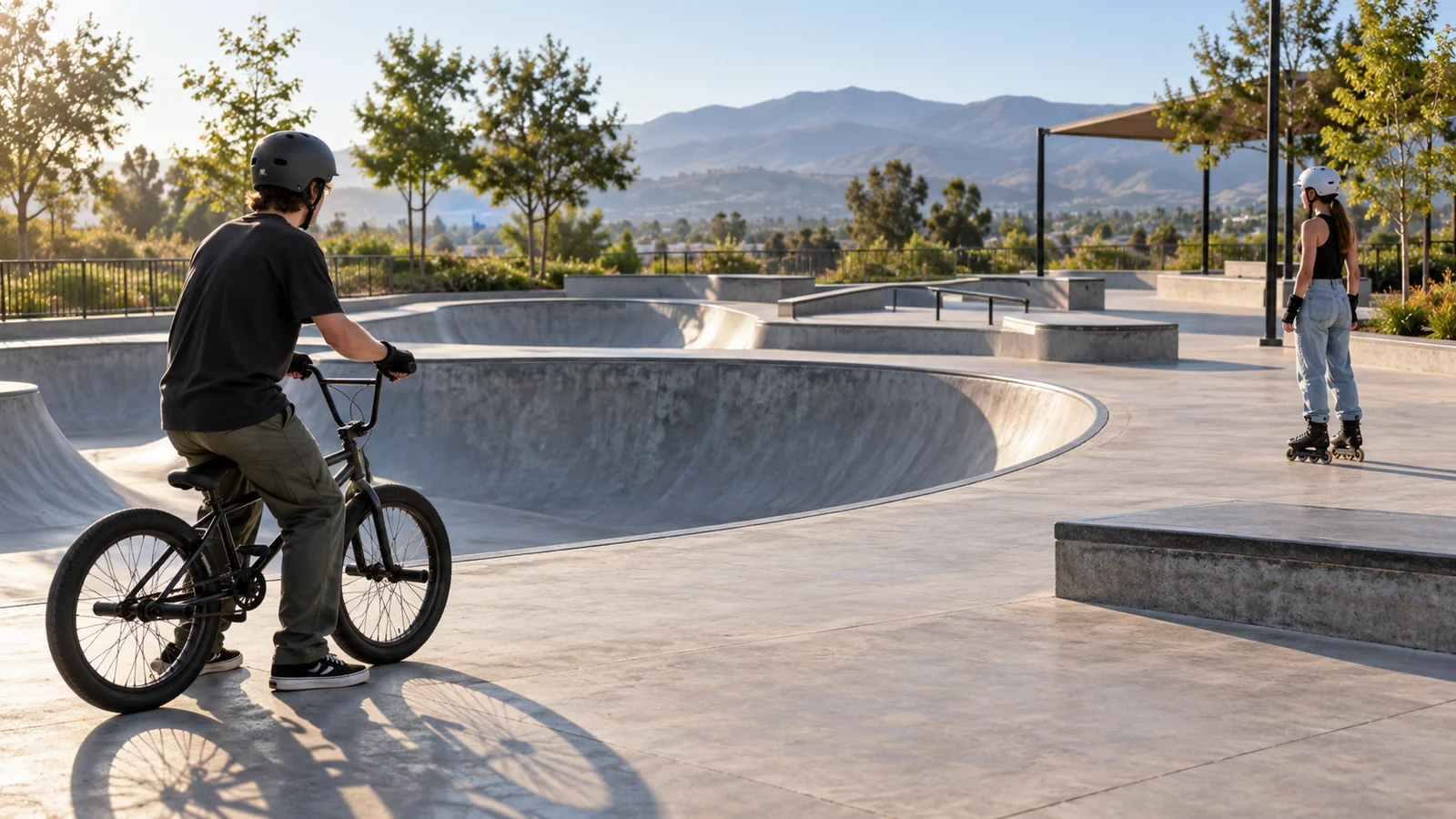
Skatepark etiquette means understanding complete riding lines, waiting for shared space to clear and making your intended run predictable. Check local rules first, then observe where people start, link features and finish. An empty-looking ramp or bowl is not necessarily available if another rider is still using the connected line.
The aim is predictable shared use. It is easier for others to avoid a rider who waits, looks and follows a clear line than one who changes direction without checking. Local park rules take precedence over any general advice, particularly on permitted equipment, opening times and protective gear. Public facilities publish their own participation information; Portland’s skateboarding page is one example of why checking the local operator matters. 2
Observe from outside the riding area
Before joining a session, watch several complete runs from a place that does not block a roll-in, landing or exit. Notice where riders begin, where they gather speed and where they finish. A beginner may see a ledge as an isolated object; a regular user may approach it from a bank on the other side of the park.
Look for blind areas. You cannot judge a bowl to be empty merely because nobody is visible from one side. Listen as well as look, but do not rely on sound alone. Headphones, wind and the noise of several disciplines can hide an approaching rider.
This observation is also a useful lesson in choosing practice space. If your skill needs frequent stops, a busy through-route is a poor place to rehearse it. Find a permitted area where stopping will not put you in the path of a faster run, or ask a coach or the operator where beginners should practise.
Take turns without assuming eye contact is enough
Wait until the previous rider has finished using the shared line and cleared the relevant space. If a queue or rotation has formed, ask how it works. There is no universal rule that the most experienced rider, the largest bike or the person closest to the coping owns the next turn.
A glance from another rider is not a guaranteed agreement about your intended line. When the situation is unclear, communicate briefly and wait. Keep first runs short and predictable. Avoid entering one feature and abruptly traversing toward a second that another group is already using.
Osceola Skatepark’s guidance emphasises waiting your turn, observing traffic and keeping spectators and filmers out of the moving activity. Those are shared-space principles, not a substitute for a particular park’s rules. 1
Pick one practice goal and a clear stopping place
A session with one goal can be productive without taking over a feature. For example, a rider who wants to improve ordinary turning could work on a permitted flat area before entering a transition. A rider learning to read a bowl can observe lines and discuss them with a coach before attempting a drop-in.
Decide where you will finish before starting. That is a planning question, not a prescribed technique: the useful stopping place is outside the next rider’s approach, not the most convenient spot to sit. If you cannot stop reliably within the space available, use an easier practice area.
Do not turn the session into a timed test of confidence. Crowding, tiredness or a changing surface can make an earlier exercise unsuitable later. A quiet park is an opportunity to practise existing foundations; it is not proof that a large feature is appropriate.
Share the park across disciplines
BMX bikes, skateboards, inline skates and scooters do not move or stop identically. Follow the posted equipment rules and any session-specific arrangements. Where several disciplines are allowed, the practical task is to agree on shared lines rather than assume everyone interprets a feature the same way.
| Situation | A useful response |
|---|---|
| Two groups approach the same feature | Pause and agree on a rotation or separate lines |
| A rider is practising repeated short attempts | Ask where their run begins and ends before crossing |
| A filmer wants a low camera angle | Choose a position outside approaches and landing areas |
| A spectator wants to stand beside the coping | Move to a viewing place that does not obstruct riding |
A collision narrowly avoided is useful information about the plan. Change the arrangement before repeating it. An apology helps restore cooperation, but a clearer line or waiting place prevents the same confusion from happening again.
Example: a ledge beside a bowl exit
A rider wants repeated short attempts on a ledge. Another group exits a bowl across the same strip of concrete. The ledge itself is unoccupied, yet the proposed practice area overlaps an exit. Two separate queues do not solve that conflict if both groups think they control different features.
A useful response is to identify the shared strip, ask how the groups are rotating and agree where each run ends. If there is no arrangement that leaves a clear line, choose another permitted area or a quieter session. Moving a bag out of the way helps, but it does not remove the intersecting runs.
This hypothetical example applies the observation and turn-taking principles in the park guidance. 1 It also shows why waiting positions matter: someone standing on the bowl deck may still obstruct an approach, even if they are not on the concrete below. Spectators and filmers need positions outside the entire route.
Choose a task that fits the available space. The BMX bowl explanation covers connected transitions; the aggressive skate guide explains why rolling control remains necessary before obstacle practice. The park plan should make room for the actual task, rather than assuming that every participant uses the feature in the same way.
Surface changes and incidents interrupt the session
Before riding, check for debris, wet areas and damage. Do not modify obstacles, apply wax or make surface changes without the operator’s permission. Such changes can affect another discipline differently from your own.
If equipment comes loose or a skateboard travels into another line, warn others clearly. If someone is hurt, stop activity around them and get appropriate help. Do not tell an injured person to stand quickly simply to keep a queue moving. The shared priority is preventing a second collision while assistance is arranged.
Leave the next session easier to organise
Keep bags, bottles and spare equipment away from riding space. Take litter with you and report damage to the operator. Encourage beginners without pressuring them to attempt something beyond their current skill. A useful session is one in which people understand where they can practise, communicate uncertainty and leave the park available for the next group.
Reader questions
Who has priority at a busy skatepark?
Follow posted rules and any organised session arrangement. Otherwise, observe the existing rotation, communicate and wait for the shared line to clear. Experience, equipment size or proximity to a feature does not create a universal right to go first.
Can I stand in an empty bowl to film a friend?
An empty-looking bowl may still be part of an approaching rider's line. Choose a filming position outside approaches, riding lines and exits, and check the operator's rules. A camera angle is not a reason to occupy active riding space.
Sources and scope
Each reference supports the topic stated in its scope note. Worked examples are illustrative unless identified as measured results. Use current local information and the manual for your own equipment alongside appropriate practical instruction.
- Osceola Skatepark: visiting etiquetteShared-space etiquette and avoiding conflicts with moving riders.
- Portland Parks: skateboarding facilitiesLocal facility information and the participation and etiquette pledge.
Continue reading
- BMX Bowl Riding: How Pumping and Transitions Work
Understand BMX bowl pumping, transition shape and line choice. Compare banks, curved walls and coping before choosing a suitable coached session.
- Aggressive Inline Skates: Flat vs Anti-Rocker Setups
Compare flat and anti-rocker aggressive skate setups, understand soul plates and H-blocks, and check frame compatibility before practising grinds.
- BMX Pre-Ride Check: Wheels, Brakes and Bike Inspection
Organise a BMX pre-ride check and write a useful fault report. Download a reusable inspection log with clearly labelled fictional examples for a mechanic.