
Speedflying vs Speedriding: Wings, Loading and Terrain
Compare speedflying and ski-based speedriding. Understand wing loading, model-specific design and why speed changes decision time near terrain.
By ActionSportsHQ Editorial · Published · 4 min read
At a glance
- Small-wing flight can leave little time and space to respond; speed is not automatically safety.
- Speedflying and ski-based speedriding have different movement and terrain contexts.
- Equipment suitability, rescue options and readiness require specialist instruction and site-specific assessment.
Speedflying generally refers to foot-launched small-wing flight, while speedriding combines wing use with skiing. The equipment and terrain tasks overlap but are not identical. Wing loading, design and site geometry must be considered together; a smaller wing is not simply a familiar paraglider with one speed setting changed.
Wing loading is a relationship, not a complete prediction
Wing loading relates the supported load to wing area. It helps explain why area and total load matter, but wing design, settings and conditions also affect behaviour. A smaller canopy is not simply the same paraglider flown faster.
There is no universal glide or speed table for all speed wings. A number detached from a particular product and condition cannot establish clearance from terrain. Equipment must be selected and used according to its actual intended application and instructions.
Speed can reduce decision time
Moving faster changes how much time remains before reaching an obstacle or terrain feature. Flying close to the surface can also reduce the space available for a response. Those consequences make the slogan “speed is safety” misleading when presented as a general rule.
The right plan is not to rely on last-moment reactions. A pilot needs suitable training, terrain understanding and a task within current competence. A successful line seen in a video does not reveal all of its planning or make it repeatable for another person.
Compare wing area, loading and intended use separately
Ozone’s speed-wing range distinguishes models by intended experience and flight or terrain context. 4 The manufacturer’s range is evidence that different tasks have different designs, not a universal progression chart for every pilot.
| Comparison | What it can show | What it cannot decide |
|---|---|---|
| Same load, different area | A change in the area-based loading relationship | Exact speed, glide or suitability |
| Same nominal loading, different wings | One matching ratio | Identical handling or certification scope |
| Foot launch versus ski-based use | Different ground and surface interactions | Automatic transfer of training between activities |
| A line seen on video | A recorded flight from one viewpoint | The full planning, weather or available alternatives |
In a simple loading comparison, reducing area while holding supported load constant increases load per unit area. This arithmetic does not tell you which size to buy or how close to terrain a wing can be flown. Manufacturer loading definitions, design, configuration and conditions remain necessary.
The decision-time relationship is simpler: for a fixed remaining distance, greater ground speed leaves less time to reach it. The example explains consequence without creating a terrain-clearance formula. A wing’s performance number cannot certify a route from a photograph.
Use the paragliding weather guide for the distinction between a regional forecast and local airflow. Use the touring and skimo explanation to distinguish ski-travel equipment roles; skiing experience does not replace specialist speedriding instruction.
Get discipline-specific instruction
Prior experience in a different flying sport is relevant background, not automatic qualification. Seek a provider that actually teaches the intended discipline; the BHPA schools directory includes discipline-specific course information. 1
The formal training context is broader than a generic equipment list. The BHPA Technical Manual describes structured aviation instruction and is not a do-it-yourself guide. 2 No article should promise readiness for terrain proximity after a fixed number of ground-handling days.
Safety equipment has conditions and limits
Helmet, harness and other equipment choices must fit the intended use and manufacturer requirements. A reserve is not a universal answer to every low-altitude situation, and its usefulness depends on the actual deployment circumstances. This article does not prescribe a reserve configuration or minimum deployment height.
Likewise, an uncertified or differently classified wing cannot be described simply as one that “will fold.” Understand what the relevant documentation does and does not establish rather than replacing it with a dramatic claim.
Treat the site as an operating environment
Check permission, local rules, airspace and terrain-specific requirements. Visiting-pilot guidance highlights why a local briefing matters. 3 Weather at one point does not describe all airflow near the proposed line.
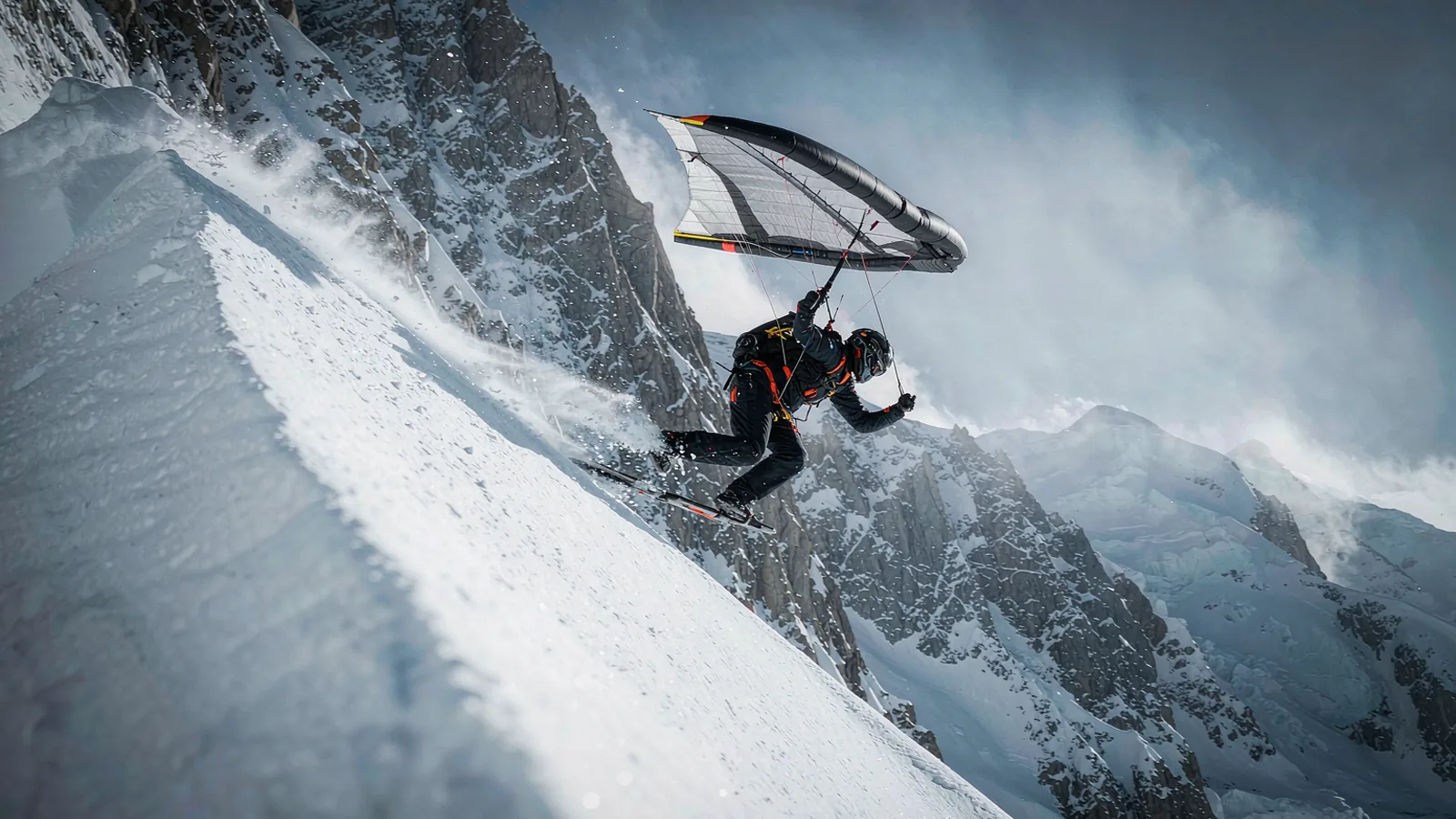
A suitable objective fits the pilot, equipment and current site assessment. The decision to defer or select another task is part of competence. The cover illustrates the activity near mountains; it does not recommend terrain proximity or demonstrate a safe route.
Reader questions
What is the difference between speedflying and speedriding?
Speedflying generally refers to foot-launched small-wing flight. Speedriding combines wing use with skis and introduces ground-contact and terrain tasks. Check the intended use of the actual wing and obtain instruction in the specific activity.
Can wing loading predict a speed wing's performance by itself?
No. It relates supported load to area, but design, configuration, pilot input and conditions also affect performance. The same nominal ratio on different wings does not establish identical handling, clearance or readiness for terrain-related flight.
Sources and scope
Each reference supports the topic stated in its scope note. Worked examples are illustrative unless identified as measured results. Use current local information and the manual for your own equipment alongside appropriate practical instruction.
- BHPA: registered schoolsFinding discipline-specific training providers; listings do not qualify the reader to fly.
- BHPA: Technical Manual, amendment 24Training framework and aviation safety context; not a do-it-yourself manual.
- BHPA: guidance for visiting pilotsLocal club briefings, site rules and visiting-pilot responsibilities.
- Ozone: speed-wing range and intended pilot contextsManufacturer distinctions among speed-wing designs and intended experience or terrain contexts; not a personal wing-size recommendation.
Continue reading
- Paragliding Weather: Wind, Gusts and Site Briefings
Prepare a paragliding weather briefing using forecast height, wind, gusts and trends. Connect launch, landing and local guidance without a universal wind limit.
- Paragliding Thermals: Rising Air, Sink Rate and Climb
Understand how thermals let paragliders climb while descending through the airmass. Compare air-relative sink, ground-relative climb and weather context.
- Ski Touring vs Skimo: Skins, Gear and Transitions
Compare ski touring, ski mountaineering and skimo racing. Understand climbing skins, boot and binding modes, and how to organise a transition.