
Skydiving Basics: Freefall, Parachutes and Training
Understand skydiving freefall, drag, parachute deployment and canopy flight. Compare tandem, AFF and other student methods before choosing training.
By ActionSportsHQ Editorial · Published · 5 min read
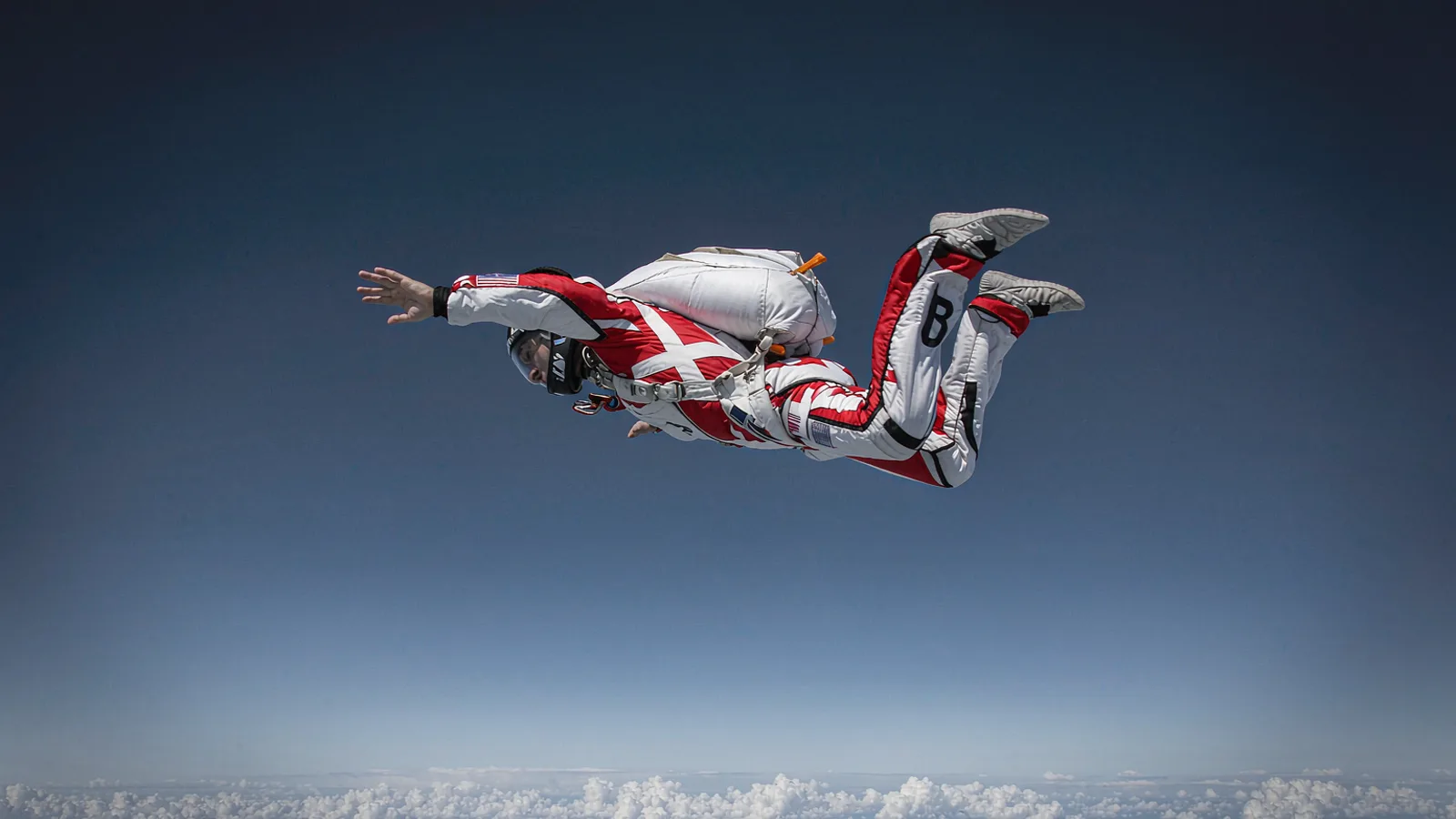
At a glance
- Freefall speed depends on the person, posture, air density and equipment; one number does not describe every jump.
- Deployment and canopy flight are separate skills that require the actual programme’s instruction.
- A first-jump experience does not by itself qualify someone for independent participation.
Skydiving has distinct phases: the aircraft exit, freefall where the method includes it, parachute deployment, canopy flight and landing. Gravity and aerodynamic forces shape freefall, while an open canopy introduces a different flying task. A first-jump experience introduces the sport; independent participation requires the relevant training and demonstrated skills.
Freefall is motion through air
Gravity accelerates a falling system, while aerodynamic forces depend on its motion and shape. The speed approached under particular conditions is affected by mass, posture, area, equipment and air density. A single “terminal speed” is not a specification for every skydiver.
Changing body position changes the interaction with the air. Learning to remain stable and move predictably needs supervised practice. A short instruction to arch or track is not a complete movement lesson and should not replace the actual programme’s methods.
Terminal speed means a force balance, not zero gravity
In a simplified steady descent, drag can grow until it balances the downward weight. The resulting constant-speed condition does not mean gravity has disappeared. NASA’s drag equation describes the influence of relative airspeed, air density, area and a drag coefficient. 4 Those variables explain why there is no single terminal speed for every body position and system.
This is a model rather than a prediction for an individual jump. Posture, equipment and air conditions can change, and the approach to a steady speed takes time. A quoted speed is therefore incomplete without the context in which it was measured. The model does not provide deployment timing or emergency procedures.
| Phase or training distinction | What changes | Where the actual instruction comes from |
|---|---|---|
| Freefall | Body-air interaction and altitude awareness | The student’s selected training programme |
| Deployment | The parachute system changes configuration | Equipment-specific teaching and supervised practice |
| Canopy flight | A flying canopy, traffic and landing plan | Canopy instruction appropriate to the actual system |
| Tandem versus AFF | Connection and student responsibilities differ | The drop zone’s briefing for the booked method |
USPA identifies tandem, AFF and other recognised methods within its student-training context. 1 They are not interchangeable bookings. A person who wants a tandem introduction should not assume that a different first-jump course provides the same preparation or responsibilities.
Use the first tandem skydive guide for booking and briefing questions. Specialist wingsuit flying introduces separate prerequisites and should not be presented as an automatic next stage after an introductory experience.
Deployment is its own training subject
A skydiving system has equipment-specific procedures, and the jump plan has context-specific decisions. Altitude awareness, separation, normal deployment and abnormal situations are addressed during suitable instruction. They cannot be compressed into a generic hard-deck number or an improvised sequence copied from another system.
USPA’s Basic Safety Requirements provide an operating framework and identify student-equipment and instructional requirements in that context. 2 The framework is not an individual clearance to jump.
Canopy flight changes the task
An open parachute is a flying system, not simply a device that stops a fall. The pilot must understand its handling, the surrounding traffic, weather and the planned landing arrangement. Specific turns, flare timing and abnormal-flight responses belong in practical instruction for the actual canopy.
A successful freefall phase does not establish canopy competence. Treat landing preparation and the operator’s briefing as central parts of the jump rather than a short final step after the exciting part.
Training methods are not interchangeable
Tandem, Accelerated Freefall and other student methods have different responsibilities and supervision. USPA’s Integrated Student Program describes a structured education framework. 1 Ask the training provider how the method being used fits that framework and what the learner is expected to demonstrate.
A tandem experience can introduce the sport, but independent jumping requires the relevant training and qualifications. USPA’s first-skydive material describes the available introductory pathways. 3
Use an objective that fits current competence
The right next task depends on the actual programme, recent practice and qualified assessment. A number of elapsed weeks does not establish readiness for a new canopy, formation task or specialist jump.
Keep the source and equipment context attached to the learning. Questions about instructions, eligibility or a change in conditions should be resolved with the operation before proceeding. Understanding the phases helps a student ask better questions; it does not replace the instructors responsible for the actual jump.
Height records need a reference surface. The MSL and AGL altitude diagrams distinguish terrain elevation, height above ground and altitude above sea level without supplying operational deployment altitudes.
Reader questions
Does terminal velocity mean gravity stops acting on a skydiver?
No. In a simplified constant-speed descent, aerodynamic drag balances weight. Gravity still acts. The speed depends on the body, posture, air density and equipment, so one advertised number cannot describe every jump.
Is a tandem skydive the same as an AFF first jump?
No. In tandem the student is connected to an instructor and shares a parachute system. AFF is a different instructional method with different student responsibilities. Ask the drop zone to explain the actual programme and preparation for the method booked.
Sources and scope
Each reference supports the topic stated in its scope note. Worked examples are illustrative unless identified as measured results. Use current local information and the manual for your own equipment alongside appropriate practical instruction.
- USPA: Integrated Student Program introductionThe scope of structured student instruction and the distinction between training methods.
- USPA: Basic Safety RequirementsUSPA operating and student-equipment requirements; not a complete personal jump procedure.
- USPA: your first skydiveTandem and other first-jump methods, preparation and training context.
- NASA Glenn: drag equationAerodynamic drag variables and the square-of-airspeed relationship under fixed model assumptions.
Continue reading
- Skydiving Altitude: MSL vs AGL and Density Altitude
Compare MSL, AGL and density altitude in skydiving. Work through ground-elevation examples and see why terrain and altitude references must stay together.
- First Tandem Skydive: What to Expect and Ask Beforehand
Prepare for your first tandem skydive with questions about eligibility, clothing, timing, weather delays, instructor briefings and what happens afterwards.
- Wingsuit Flying: Requirements, Glide and Training
Check USPA wingsuit requirements and first-flight training context. Understand glide ratio, suit selection and why aircraft skydives differ from BASE.